
Patient acquisition system
Patient acquisition systems for chiropractic practices
Chiropractic patient acquisition should make the first-visit decision clear, respond to local demand quickly and connect booking, attendance and appropriate follow-up. Specific patient questions and clinical recommendations remain with the licensed practice team.

Built around the people doing the work
A growth system the practice owner can actually see and manage.
Clear handoffs give owners and practice teams one shared view of what happened after a prospective patient reached out, without turning care into a marketing dashboard.
- Administrative clarity
- Visible human ownership
- Clinical boundaries protected
Broad local pages and discount-led ads can generate enquiries without clarifying the first visit, availability or who the practice is designed to help.
Staff chases low-context leads, good-fit enquiries continue searching and the owner cannot connect source to attended evaluations.
For independent chiropractic and musculoskeletal-care practices, the useful unit is not a click, message or isolated booking. It is a visible journey from the original source through a qualified conversation, an appropriate appointment and attendance. That shared definition keeps marketing, operations and the front desk accountable to the same result.
The working model
How should the system be built?
Create clear local entry points, explain the first visit, respond to missed calls and forms, then connect reminders, rebooking, reviews and continuity to the same record.
- 01
Choose the service and capacity to grow
Start with a priority offer, realistic provider capacity and a clear definition of patient fit. Broad campaigns that promote every service at once make the page vague and create demand the practice may not be ready to serve.
- 02
Build the decision path
Create search and campaign pages that answer the practical questions behind the decision, explain the first step and preserve the context that brought the prospective patient to the practice. Clear language usually outperforms a long list of credentials without a next action.
- 03
Connect response and booking
Route every form, call and approved message to a named owner and status. A useful acknowledgement, timely human response and appropriate calendar path protect the demand already generated by SEO, referrals or paid media.
- 04
Protect attendance and continuation
Confirmation, preparation, reminders, rescheduling and respectful follow-up are part of acquisition economics. The practice should know how many booked consultations attend and what appropriate next step follows the first visit.
- 05
Report the journey by source
Connect source, service, response, booking and attendance in one decision-ready view. This makes it possible to invest in channels that create useful patient relationships instead of rewarding the cheapest form submission.
Implementation detail
What needs to be true in the real setup?
A reliable implementation is specific enough for staff to operate and simple enough to audit. These are the practical conditions we would validate before launch.
- Avoid unsupported clinical claims.
- Explain the first appointment and practical expectations.
- Route symptom questions to the clinical team.
- Measure attended first visits rather than form volume alone.
Set the baseline before changing the workflow and review a sufficiently large period after launch. Segment results by source, service, provider or time window only when the sample supports the comparison. The purpose is a better weekly decision, not a busier dashboard.
YellowHorns reports assumptions beside the result and avoids claiming that one workflow controls revenue, clinical fit or patient choice. That makes improvement slower to exaggerate and easier to trust.
Work, not theatre
What we actually built.
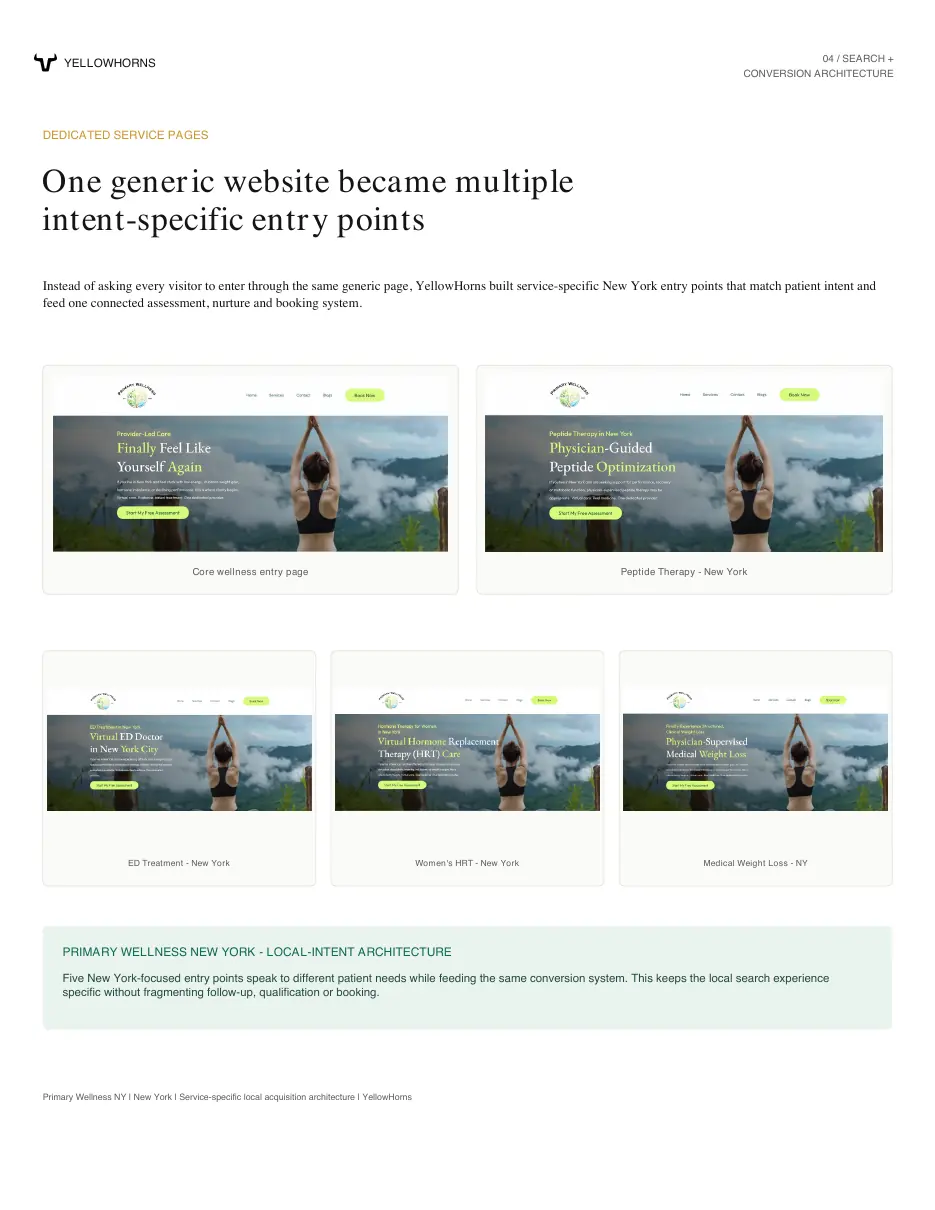
Building a complete patient acquisition system for a telehealth wellness practice
7 to 10 · organic booked consultations per week
Steven Smith, FNP-BCFounder, Primary Wellness NYRead the build notes →
How a psychiatry practice turned a confusing digital presence into a clear path to inquiry
Clearer · practice positioning
Erica SmithFounder, AccessMind PsychiatryRead the build notes →
What building the growth engine for a clinical AI platform taught us about practitioner adoption
50+ / month · one-to-one onboarding calls supported with CSR teams
FunctionalMind AIGrowth operations engagementRead the build notes →“We had enquiries coming in, but too many went quiet before the appointment. Now the follow-up feels like a system, not a pile of tools.”
“The big opportunity wasn’t another campaign. It was what happened after someone contacted us. That journey is much clearer now.”
“They found the drop-offs before suggesting more ads. We can finally see and measure the acquisition process.”
“We had demand, but too many ways for people to fall through. The team can now see every opportunity and what needs to happen next.”
“Follow-up used to feel reactive. Now new enquiries, undecided patients and past patients each have an intentional path.”
“We were paying for interest without getting enough consultations. The changes connected enquiries, reminders and reactivation.”
Clear answers
Questions practice owners ask.
What is chiropractic patient acquisition?
Chiropractic patient acquisition should make the first-visit decision clear, respond to local demand quickly and connect booking, attendance and appropriate follow-up. Specific patient questions and clinical recommendations remain with the licensed practice team.
What should a practice fix first?
Start with the measurable handoff creating the largest avoidable loss. For independent chiropractic and musculoskeletal-care practices, that means establishing the current journey before adding another campaign, message sequence or software connection.
How long does implementation usually take?
A focused workflow can often be designed and launched in two to four weeks. Timing changes with platform access, approvals, messaging registration, data cleanup, number of locations and the exceptions the practice needs to support.
Does YellowHorns replace the practice team?
No. YellowHorns removes repeatable administrative friction and makes ownership visible. Practice staff keep control of clinical questions, sensitive conversations, approvals and the judgment that a patient relationship requires.
What happens in the free audit?
We review the current chiropractic patient acquisition journey, identify the first constraint, test the assumptions behind it and explain the narrowest system we would build. The 30-minute session is free and useful even if the practice does not hire YellowHorns.
Free 30-minute growth audit
Bring us the real patient journey.
Answer a few focused questions. We'll review the system, identify the first constraint and prepare one specific recommendation before the call.
Start the interactive audit